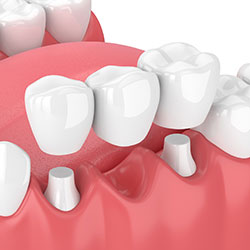
A dental bridge (also called a fixed partial denture) is a prosthetic appliance that replaces one or more missing teeth. It typically consists of artificial teeth (pontics) anchored to crowns placed on the adjacent natural teeth (abutment teeth). The procedure usually involves preparing (shaping) the abutment teeth, taking impressions, placing a temporary bridge, and finally cementing the permanent bridge.
What to Expect During Treatment
- Anesthesia: Local anesthetic is usually used; discuss any allergies or sensitivities.
- Multiple visits: Preparation, impressions, temporaries, try-in, and final placement.
- Temporary bridge: You will wear one while the permanent bridge is fabricated; it may feel different or require adjustments.
- Post-operative care: Instructions on oral hygiene (especially flossing under the bridge with tools like floss threaders or water flossers), diet, and when to return for adjustments or re-cementation.
Advantages
- Faster, Non-Surgical Process: Unlike dental implants, bridges do not require surgery or long healing times, often completed in only a few weeks.
- Improved Function and Aesthetics: They restore the ability to chew properly, speak clearly, and enhance the appearance of your smile.
- Affordability: They are generally more affordable than dental implants
- Stability: As fixed, non-removable, and stable devices, they do not shift like dentures.
- Prevent Shifting: Bridges prevent neighboring teeth from shifting into the gap.