
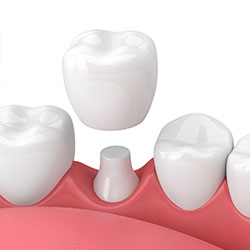
A dental crown (also called a "cap") is a restoration that covers the entire visible portion of a tooth above the gum line. It is used to restore a tooth that is severely damaged by decay, fracture, large fillings, or after root canal treatment. The procedure typically involves:
- Numbing the area with local anesthesia.
- Shaping (reducing) the tooth to make room for the crown.
- Taking impressions or digital scans of the prepared tooth.
- Placing a temporary crown while the permanent crown is fabricated in a lab.
- Cementing the permanent crown at a follow-up visit.
The crown may be made of porcelain, ceramic, metal, zirconia, or a combination of materials, depending on location, strength needs, and aesthetics.
Advantages
- Protection and Strength: Crowns reinforce damaged, cracked, or weak teeth, preventing further decay or fracturing.
- Restores Functionality: They restore the ability to bite and chew properly.
- Longevity: They are a durable, long-term solution, often lasting 10–25 years.
- Cosmetic Improvement: Porcelain or ceramic crowns can be matched to the color and shape of surrounding teeth, enhancing the smile.
Unlike fillings which apply the restorative material directly into your mouth, a crown is fabricated away from your mouth. Your crown is created in a lab from your unique tooth impression or scan which allows a dental laboratory technician to examine all aspects of your bite and jaw movements. Your crown is then sculpted just for you so that your bite and jaw movements function normally once the crown is placed.